Most custom trading card mistakes happen before printing starts: missing photos, inconsistent crops, typos on card backs, foil on the wrong cards and sets that arrive unsorted. Get Custom Trading Cards returns a free mockup within 24 hours with unlimited free revisions, so nearly every error can be caught at proof stage. This guide shows what goes wrong on a first order and how to prevent it.
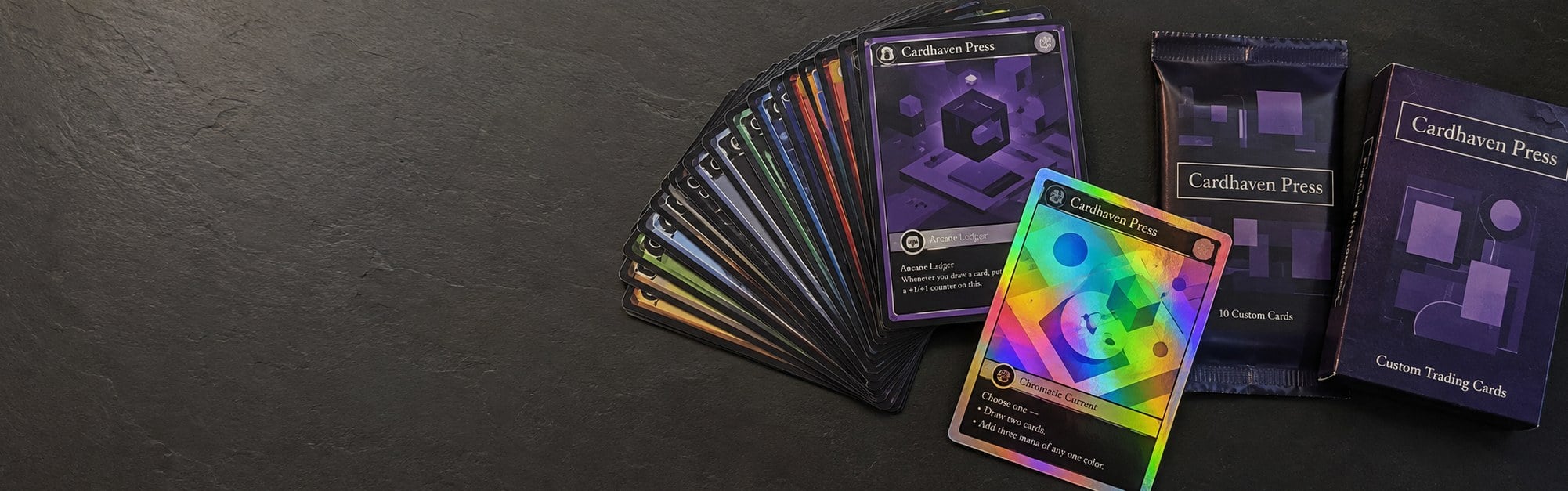
- Most trading card errors start with content collection, not printing
- Free mockup within 24 hours with unlimited free revisions
- Nothing is charged until you approve the design
- Minimum order is 12 cards, and every card in a set can be different
- Standard production is about 2 weeks after approval
What are the most common mistakes on a first custom trading card order?
The most common mistakes on a first custom trading card order are content problems, not printing problems: photos that do not match each other, names and stats typed wrong on the back, a finish chosen for the wrong reason, and no plan for sorting the finished cards. Get Custom Trading Cards prints what the approved proof shows, so a mistake that survives the proof survives the print run.
Trading cards are unusual among printed products because a single order is really a set. A team of players, a classroom of students or a deck of game characters means many unique fronts and backs, each with its own photo and text. Every extra card is another chance for a misspelled name or a blurry photo to slip through.
The good news is that each of these mistakes has a simple fix that costs nothing but a little planning. The sections below walk through where first-time buyers usually stumble, in the order those problems tend to appear: collecting content, choosing photos, writing card backs, picking finishes, then receiving and handing out the cards.
Why do missing photos and names stall a trading card order?
Missing photos and names stall a trading card order because every card in the set needs its own content before the full proof can be finished. When one coach, parent or teammate is slow to send a photo, the whole set waits. Buyers often request a quote before the roster is final, then discover that collecting content takes longer than the design itself.
Fix this by building a simple content sheet before you contact anyone. List every card in the set with columns for the name, position or title, the back text and the photo file name. Share the sheet with whoever supplies the content, and set a firm cutoff date ahead of your proof review.
- Name each photo file after the person or character it shows, so nothing gets swapped.
- Confirm spellings directly with each person rather than copying from a roster.
- Decide early what happens if someone never sends a photo: a team logo card, a silhouette or a later reorder.
With a complete sheet, the 24-hour mockup turns into a real proof of the whole set instead of a sample card waiting on missing pieces.
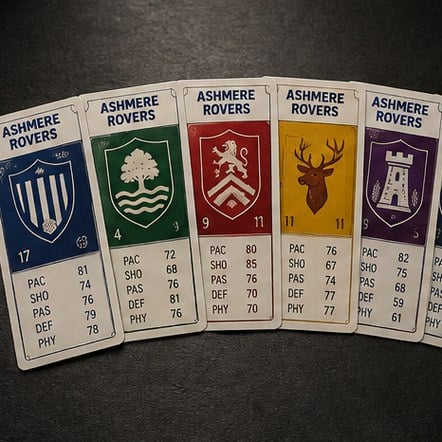
What photo problems make custom trading cards look amateur?
The photo problems that make custom trading cards look amateur are inconsistency and low quality: mixed backgrounds, different crops, some faces tiny and others filling the frame, dark indoor shots next to bright outdoor ones, and images pulled from social media that look soft once printed. A trading card set is viewed side by side, so any mismatch is obvious.
The strongest sets use photos taken the same way. If you can, schedule a short photo session with the same backdrop, lighting and framing for everyone. If photos must come from many sources, ask for the original file from the phone or camera rather than a screenshot or a forwarded message, which often shrinks the image.
- Ask for vertical photos with space above the head and below the shoulders, so every crop can match.
- Avoid busy backgrounds that fight with names and logos on the card front.
- Send the largest original files you have; a small image cannot be sharpened into a crisp card.
When a photo is too small or too dark, the mockup review is the moment to replace it. A free revision costs nothing, while a blurry card lasts as long as the collection does.
How do typos and stat errors slip past a trading card proof?
Typos and stat errors slip past a trading card proof because reviewers look at the card fronts and skim the backs. The back is where jersey numbers, positions, fun facts and stats live, and it is dense, small text that tired eyes read as correct. On a set with many unique cards, the person approving the proof often checks a few and assumes the rest match.
Treat the proof like a document review, not a picture review. Get Custom Trading Cards offers unlimited free revisions, so there is no reason to approve a set you have not read card by card.
- Compare every name on the proof against the content sheet, letter by letter.
- Read every card back aloud, including numbers, dates and positions.
- Check that each photo sits with the right name, especially for siblings or players who look alike.
- Confirm logos, team names and sponsor marks are current and spelled correctly.
- Approve only after someone who did not type the text has also read it.
A careful proof read takes far less time than explaining a misspelled name to a player’s family after the cards arrive.
Is it a mistake to put foil or holographic finishes on every trading card?
Putting foil or holographic finishes on every trading card is often a mistake, because a special finish loses its impact when nothing stands out. Foil works best as a reward: a captain card, a championship card, a rare character in a game deck or a top achiever in a classroom set. When every card shines, none feels special.
First-time buyers also choose a finish without thinking about how the card will be used. A glossy surface can glare under gym lights or a booth spotlight, and heavy foil coverage can make small text harder to read. Matching the finish to the use matters more than choosing the flashiest option.
- Use whole-card or spot foil for chase and award cards, and a clean standard finish for the base set.
- Keep names and stats away from heavily textured foil areas so they stay legible.
- Ask for the finish to be shown in the mockup notes, so everyone approving knows which cards are special.
For a deeper comparison of foil options, see the guide to whole-card foil vs. spot foil trading cards and the foil and holographic cards page.
What goes wrong when custom trading cards arrive and need to be handed out?
What goes wrong when custom trading cards arrive is usually sorting: a box of mixed cards lands days before the event, and nobody planned how each player, student or guest gets the right ones. Sorting a large set by hand the night before a banquet is a stressful, avoidable mistake.
Plan distribution at the same time you plan the design. Decide whether each person gets a stack of their own card, a full set of the team, a mix, or a sealed pack. Those choices affect how cards should be grouped and whether card packs and boxes make more sense than loose stacks.
- Note on the quote request how you want the finished cards grouped.
- Keep a few spares of each card for latecomers and replacements.
- Give yourself time between delivery and the event to open boxes and check counts.
Teams handing cards out at a game, schools giving them as rewards and businesses using them at a booth all have different needs. Writing down how cards will physically reach people turns delivery day into a quick handoff instead of a scramble.
How can first-time buyers avoid timing and quantity mistakes?
First-time buyers avoid timing and quantity mistakes by planning backward from the date the cards must be in hand and by counting every person, spare and keepsake copy before requesting a quote. Production at Get Custom Trading Cards takes about 2 weeks after proof approval, with faster turnaround available through express shipping, and the minimum order is 12 cards.
The timing trap is assuming the clock starts at the quote. Production begins only after approval, so slow content collection and long proof reviews eat into the schedule. The quantity trap is ordering exactly one card per person and forgetting coaches, sponsors, grandparents or the extra copies players always want.
The detailed guides on how far ahead to order and how many trading cards to order cover both topics step by step.
Which first-order trading card mistakes matter most, and how do you prevent them?
The first-order trading card mistakes that matter most are the ones that cannot be fixed after printing: wrong names, wrong photos and missing cards. The table below summarizes each common mistake, what it causes and the simple habit that prevents it.
| Mistake | What it causes | How to prevent it |
|---|---|---|
| Incomplete roster or content | Proof stalls, deadline slips | Build a content sheet with a firm cutoff |
| Mismatched or low-quality photos | A set that looks uneven side by side | Same backdrop and framing, original files |
| Skimming card backs | Misspelled names, wrong numbers | Read every card against the sheet |
| Foil on every card | No standout cards, glare, hard-to-read text | Reserve foil for chase or award cards |
| No sorting plan | Last-minute hand sorting | State grouping or packs on the quote |
| Exact-count ordering | No spares for latecomers | Count extras before quoting |
Whether the set is for sports teams, a business team or a wedding party, the pattern is the same: finish the content, read the proof closely, then approve. When you are ready, request a quote and the mockup arrives within 24 hours.
Frequently asked questions
Should I use cell phone photos for custom trading cards?
Cell phone photos can work well for custom trading cards when they are original files taken in good light. Problems come from screenshots, cropped social media images and forwarded messages, which shrink the file and soften the print. Ask each person to send the photo straight from the phone's camera roll, shot vertically with a plain background, so the whole set prints sharp and consistent.
How do I keep player photos consistent across a trading card set?
Trading card sets look most consistent when every photo shares the same backdrop, lighting, framing and orientation. A short photo session for the whole team is the easiest route. When photos come from different people, give everyone the same simple instructions: vertical shot, head and shoulders, plain background, daylight. Get Custom Trading Cards can then match crops across the set in the mockup.
What text errors show up most often on custom trading cards?
Custom trading cards most often carry misspelled names, swapped jersey numbers, outdated positions and stats copied from the wrong season. These errors usually sit on the card back, where reviewers read less carefully than on the front. Checking every card against a single content sheet, and having a second person read the backs aloud, catches nearly all of them before approval.
Is it a mistake to put too much text on a trading card?
Crowding a trading card with text is a common first-order mistake. Long bios and full stat tables force tiny type that is hard to read and makes the set feel cluttered. Choose the few details people care about, such as name, position or title, number and one short fact. Get Custom Trading Cards will flag text that looks too dense during the mockup review.
Why should every card in a trading card set use the same template?
Trading card sets feel like a real collection when every card shares one template: the same name placement, logo position, border and back layout. Mixing layouts makes the set look improvised and makes cards harder to compare. Only the content should change from card to card, while special cards such as captains or chase cards can add foil without changing the core layout.
What is the risk of approving a trading card proof too quickly?
Approving a trading card proof too quickly is how typos, swapped photos and missing cards reach the printer. Once you approve, Get Custom Trading Cards starts production on exactly what the proof shows. Because revisions are unlimited and free, there is no benefit to rushing the review. Take the time to check every card front and back before you say yes.
Why do trading card colors sometimes look different from my screen?
Trading card colors can shift from screen to print because monitors glow with light while printed cards reflect it, and every screen is calibrated differently. Bright neon tones and very dark shadows are the most affected. Use your team or brand colors consistently, avoid relying on a single phone screen to judge color, and ask Get Custom Trading Cards about any color that must match closely.
How do I avoid trading card designs that are hard to read?
Trading card designs become hard to read when light text sits on a busy photo, when type is too small, or when names overlap textured foil. Keep a solid band or shaded area behind names, use a clear typeface for stats, and leave text away from the card edges. Reviewing a printed-size view of the mockup, not a zoomed-in screen, shows real legibility.
Can I use pro team logos or cartoon characters on custom trading cards?
Custom trading cards should only use logos, characters and artwork you own or have permission to use. Professional team marks, licensed cartoon characters and celebrity photos belong to someone else, and using them is a common first-time mistake. Your own team name, school mascot, business logo or original game art are the safe choices, and they make the set more personal anyway.
What should I do if someone leaves the team before trading cards print?
Trading card rosters change, so decide how to handle a departure before you approve the proof. If the cards have not been approved yet, simply remove that card or replace it with a new member through a free revision. Get Custom Trading Cards only starts production after approval, which makes the proof stage the right time to lock the final roster.
How can I run several teams in one trading card order without mix-ups?
Trading card orders covering several teams stay organized when each team has its own labeled content sheet, its own photo folder and a clear team name on every card. Tell Get Custom Trading Cards how the finished cards should be grouped, by team or by player, so sorting is planned before printing. Reviewing each team's proof separately also prevents photos from crossing teams.
Is skipping spares a mistake on a custom trading card order?
Skipping spares is one of the most regretted custom trading card mistakes. Cards get bent, lost, traded away or requested by relatives, and new members often join after the order ships. Adding a modest number of extra copies for each card costs far less effort than placing a small reorder later, and the minimum order of 12 cards applies to every new run.
Get a free mockup for your trading cards
Send your logo or idea and the quantity you have in mind. Get Custom Trading Cards returns a free mockup within 24 hours, you approve the design before anything is produced, and standard turnaround is about two weeks with faster options available. Get a custom quote.